All articles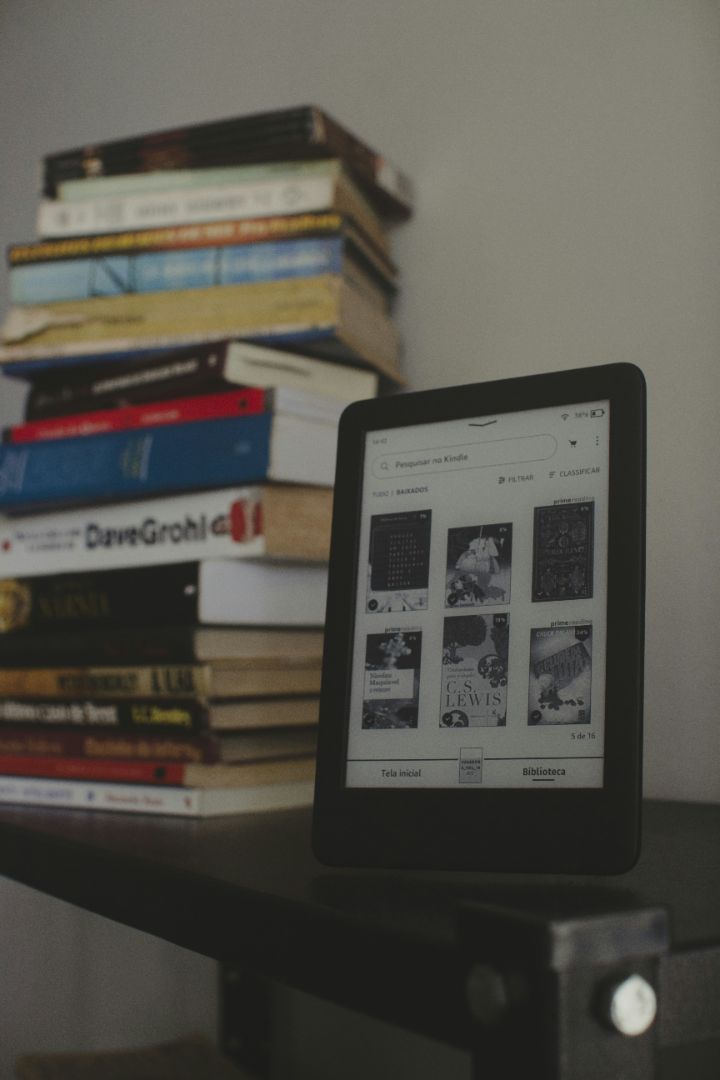
Paper or Screen? What Does Your Child's Brain Really Prefer?
As parents, we often celebrate the fact that our children are reading whether it's a paperback, a Kindle, or an iPad. After all, reading is reading... isn't it?
The answer is yes - and no.
Modern research suggests that while digital books have made reading more accessible than ever, the way our brains process information can differ depending on the medium. Understanding these differences can help parents make better choices, especially when balancing learning and leisure.
The Brain Doesn't Just Remember Words
When children read a physical book, they aren't only processing the text. Their brains are also quietly creating a mental map of the book.
Many adults have experienced this without realising it:
"I remember that diagram was on the left page."
"The answer was somewhere near the end of the chapter."
These spatial cues act like landmarks that help the brain retrieve information later. The thickness of the pages, the location of a paragraph, and even the act of turning pages all contribute to memory. With most e-books, especially those that rely on continuous scrolling, many of these physical landmarks disappear.
Reading Is More Than Looking at Words
Brain imaging studies suggest that reading on paper and reading on screens engage the brain slightly differently. For simple stories or casual reading, comprehension is often very similar across formats. However, when the material becomes complex - such as science, mathematics, history, or philosophy - the brain may need to work a little harder to organise and retain information on digital screens.
This doesn't mean screens are harmful. It simply means that the medium can influence how efficiently information is processed.
The Bigger Challenge May Not Be the Screen
Interestingly, researchers believe that the greatest challenge isn't the screen itself. It's everything that comes with it. A tablet is rarely just a reading device. It also holds games, videos, messaging apps, social media, and endless notifications. Even when these distractions are turned off, our brains have learned to associate the device with switching tasks quickly.
A physical book asks for only one thing: read.
That simplicity allows many children to remain immersed for longer periods.
Kindle and Tablets Are Not the Same
It's easy to group all digital reading together, but there is an important difference.
A Kindle is designed primarily for reading. Its e-ink display resembles paper, causes less eye strain for many readers, and offers very few distractions.
An iPad or tablet, on the other hand, is a multitasking device. Bright displays, notifications, and easy access to other apps can interrupt concentration, even if only for a moment.
When parents think about digital reading, it helps to distinguish between these two experiences.
Does This Mean Children Should Never Read Digitally?
Not at all. Digital reading has many advantages:
- Thousands of books can be carried in one device.
- Adjustable font sizes make reading easier for many children.
- Built-in dictionaries encourage independent learning.
- E-books are often more affordable and instantly available.
- They can motivate reluctant readers who enjoy technology.
For many families, digital books have helped children read more than they otherwise would. And that is a significant benefit.
Choosing the Right Medium for the Right Purpose
Rather than asking "Which is better?", a more useful question is:
"What is my child reading?"
For example:
Physical books work particularly well for:
- School textbooks
- Exam preparation
- Subjects requiring deep understanding
- Long periods of focused study
Digital books are excellent for:
- Novels
- Leisure reading
- Travel
- Quick reference
- Building a regular reading habit
Each format has its strengths.
The Goal Isn't Paper or Pixels
The real objective isn't to win the debate between books and screens. It is to help children become thoughtful readers who can focus, question ideas, imagine possibilities, and enjoy learning.
Whether that journey begins with the feel of turning a page or the tap of a screen matters less than ensuring they have opportunities for both.
As technology continues to evolve, perhaps the best gift we can give our children is not choosing one medium over another, but helping them understand when each serves them best.
Because in the end, it isn't the paper or the pixels that shape the mind. It's the habit of reading itself.
Reference:
Li, Y., & Yan, L. (2024).
"Which reading comprehension is better? A meta-analysis of the effect of paper versus digital reading in recent 20 years."
Telematics and Informatics Reports.
de-la-Peña, C., Chaves-Yuste, B., & Luque-Rojas, M. J. (2024).
"Bridging the Printed or Digital Controversy."
Journal of College Reading and Learning.
Reader, Come Home
One of the best books on how digital reading changes attention and deep reading.
Words Onscreen
Explores how reading habits differ between paper and screens and why students often prefer print for learning.
Li, Y., & Yan, L. (2024).
"Which reading comprehension is better? A meta-analysis of the effect of paper versus digital reading in recent 20 years."
Telematics and Informatics Reports.